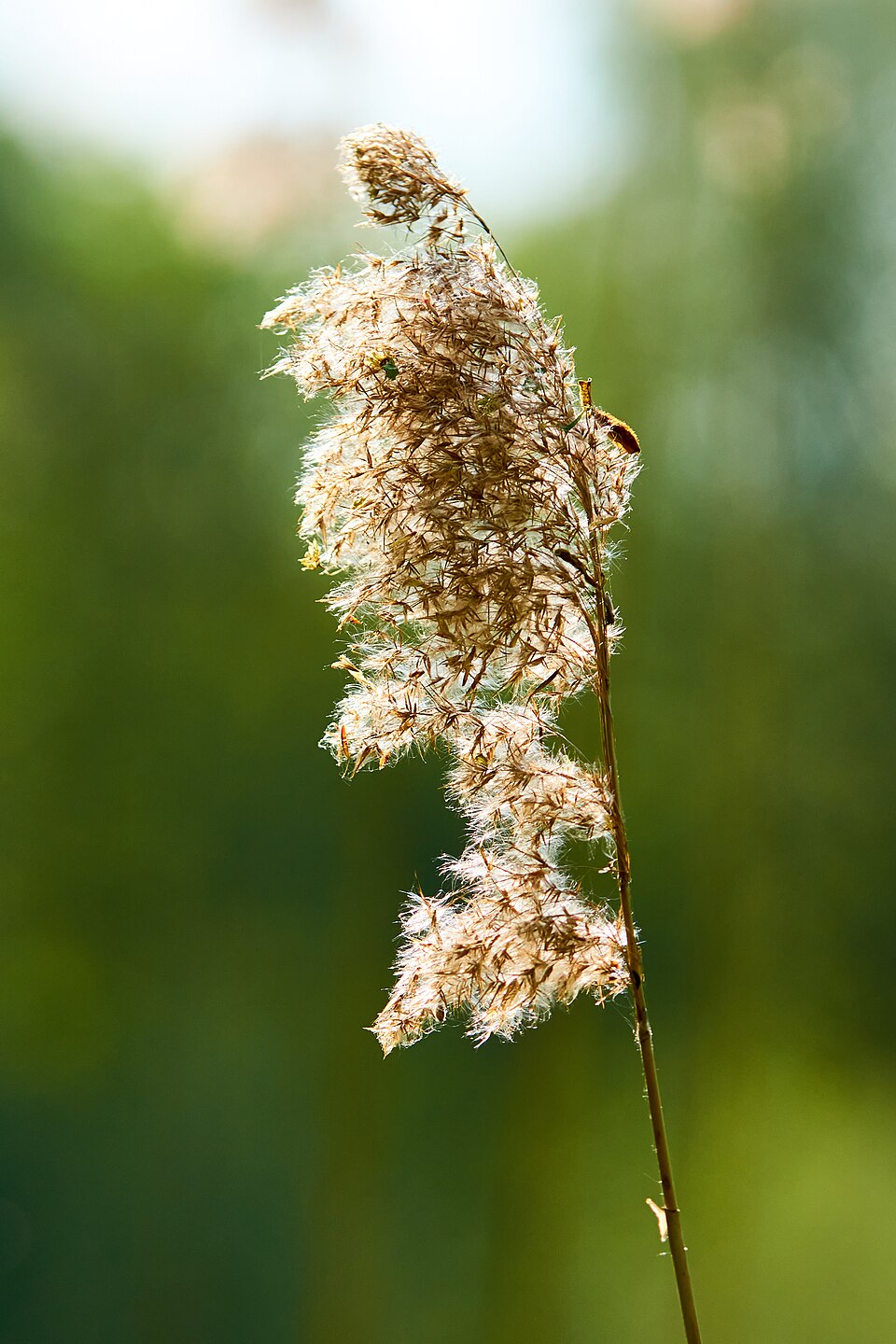
Common Reed forms the dense stands of tall grass around VNC's pond, creating a distinctive wetland habitat in the heart of the nature center. Its tall feathery plumes wave dramatically in the breeze and provide important cover for secretive marsh birds.
While non-native strains of Phragmites are considered invasive in some parts of North America, the plant at VNC provides valuable wildlife habitat and is managed carefully to maintain the pond ecosystem.
Did You Know?
The hollow stems of Common Reed have been used by humans for thousands of years — to make flutes, thatching, arrows, and even pens for writing. 'Phragmites' comes from the Greek word for 'fence' or 'screen.'
Growing Details
Sun
Full Sun to Part Shade
Water
Wetland — needs standing water
Soil
Moist, muddy, silty
Range
Worldwide — cosmopolitan
Family
Poaceae (Grass)
Spread
Aggressive via rhizomes
Wildlife Value
Least Bittern and Sora Rail nest hidden in dense reed beds at VNC's pond
Red-winged Blackbirds use reed stems as singing and nesting perches
Pond habitat supports Green Herons, Anhingas, and egrets year-round
Provides shelter for frogs, turtles, and aquatic invertebrates
Photos
Plumes
Pond View
Stems
Birds in Reeds
🌿
Explore All 40+ Native Plants
Browse the full plant guide, plan your visit, or become a member for free admission every time.